
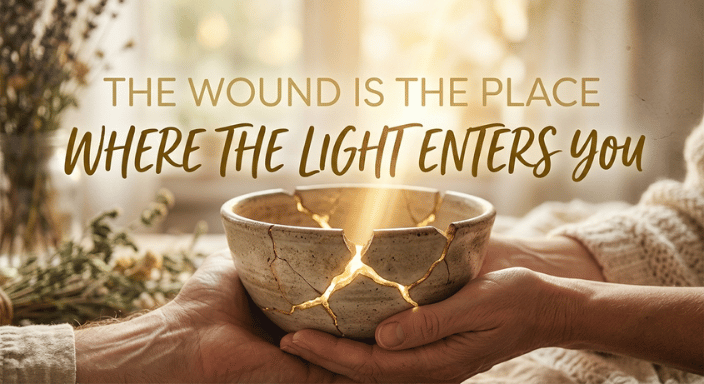
The wound is the place where the Light enters you.
By: Rumi | Published on Apr 08,2026
Category Spiritual Quotes
About This Quote
This profound teaching comes from Rumi (1207-1273), the 13th-century Persian poet, Islamic scholar, and Sufi mystic whose poetry has transcended time, culture, and religion to touch millions of hearts worldwide. Rumi wrote in Persian, and his works—particularly the Masnavi and the Divan-e Shams-e Tabrizi—are considered masterpieces of spiritual literature, exploring the nature of divine love, suffering, transformation, and union with the Divine.
Rumi spoke from lived experience. He endured tremendous personal loss, including the death of his spiritual companion Shams-e Tabrizi, which devastated him and simultaneously opened him to profound mystical experiences. His poetry emerged from his wounds. His deepest spiritual insights came through his deepest pain. This quote captures the central paradox of spiritual growth: it's often your brokenness, not your wholeness, that becomes the doorway to divine light.
Why It Resonates
Think about the wounds in your life. The losses. The betrayals. The disappointments. The traumas. The moments when life broke you open. You've probably spent enormous energy trying to hide these wounds, heal them quickly, pretend they don't exist. You see them as weaknesses, as damage, as parts of yourself that need to be fixed or forgotten.
But Rumi is saying something radical: these wounds aren't obstacles to spiritual growth. They're the very doorways. The cracks. The openings. The places where something greater than yourself can enter.
When you're whole and unbroken—or at least when you believe you are—you're closed. Complete. Sufficient unto yourself. There's no opening for light to enter because you don't need anything. You've got it all figured out. You're fine. You're in control. You're holding it together.
But when life breaks you open—when loss devastates you, when failure humbles you, when suffering cracks you apart—suddenly you're not fine. You're not in control. You're not holding it together. And in that moment of brokenness, of vulnerability, of complete openness—light can enter.
Not because you're seeking it. Not because you're doing everything right. But because you're finally open. The wound has created an opening that wasn't there before. Your defenses are down. Your pretenses are shattered. Your armor is cracked. And through those cracks, light enters.
This resonates because you know this is true. Your greatest growth hasn't come from your victories—it's come from your defeats. Your deepest wisdom hasn't come from your successes—it's come from your failures. Your most profound spiritual experiences haven't come from times when everything was perfect—they've come from times when everything fell apart.
The Spiritual Wisdom Behind It
This teaching is central to Sufism, the mystical tradition within Islam. Sufis teach that the ego—the false self, the constructed identity—must be broken for the true self to emerge. Suffering, loss, and wounds crack the ego open. In that openness, the divine can be experienced.
The concept of "the dark night of the soul," described by Christian mystic St. John of the Cross, points to the same truth. Spiritual awakening often comes through periods of profound darkness, doubt, and suffering. The breakdown precedes the breakthrough. The wound precedes the light.
Buddhism teaches about the "cracks in the world" (dukkha)—suffering, impermanence, unsatisfactoriness. But these aren't problems to solve—they're teachers pointing to deeper truth. The Buddha's enlightenment came after confronting suffering directly, not avoiding it.
In Kintsugi, the Japanese art of repairing broken pottery with gold, broken places aren't hidden—they're highlighted. The cracks become the most beautiful part of the object. The brokenness is honored, not concealed. This is a physical manifestation of Rumi's teaching: wounds can become places of beauty and light.
Carl Jung wrote about "the wounded healer"—the archetype of someone whose own wounds give them the capacity to heal others. Your wounds don't disqualify you from spiritual work—they qualify you. They give you depth, compassion, understanding you couldn't have without them.
Modern trauma research shows that post-traumatic growth is real. People who've suffered profound wounds often report experiencing greater appreciation for life, deeper relationships, increased personal strength, and enhanced spiritual development. The wound became the doorway to growth they couldn't have accessed otherwise.
The Deeper Meaning
This quote is teaching you to completely reframe your relationship with suffering and wounds. Most spiritual teaching tells you to transcend suffering, overcome wounds, rise above pain. But Rumi is saying: don't transcend the wound. Enter it. Because the wound is holy. It's where transformation happens.
"The wound is the place"—not a place, but the place. The specific location where light enters. Your particular wounds—not theoretical suffering, not someone else's pain, but your actual lived experience of being broken—these are the sacred openings.
"Where the Light enters you"—the Light (capitalized, suggesting the divine) doesn't enter through your strengths, your accomplishments, your perfections. It enters through your cracks. Through the places you're broken open. Through your vulnerability, your suffering, your humanness.
This inverts everything you've been taught. You thought you needed to be whole to be spiritual. Healed to be holy. Strong to be wise. Rumi says: your brokenness is your blessing. Your wound is your wisdom. Your crack is your connection to the divine.
The deeper wisdom is that spiritual growth requires brokenness. Not because suffering is good in itself, but because the defended, armored, "perfect" self cannot receive light. It's too closed. Too complete. Too protected. Only when you're cracked open—by loss, by failure, by suffering—does an opening exist for something greater to enter.
This doesn't mean seeking suffering. It means honoring the suffering that comes, recognizing it as potentially sacred, allowing it to be the opening rather than something to quickly seal shut. Your instinct is to heal the wound as fast as possible, to close the crack, to restore wholeness. But what if you stayed open long enough for the light to enter?
Living This Truth
Stop hiding your wounds. Not in the sense of oversharing trauma, but in the sense of pretending you're not broken. Your wounds are part of your story. They've shaped you. They've opened you. They deserve to be acknowledged, not concealed.
Look for the light in your wounds. When you examine your losses, your failures, your traumas—what opened in you because of them? What compassion developed? What wisdom emerged? What strength grew? The light is there if you look for it.
Stop rushing to heal. You're so desperate to close the wound, to stop the pain, to be "better" that you miss the sacred opening. Sometimes healing means staying open long enough for transformation to happen, not just sealing the crack as quickly as possible.
Honor your scars. Scars are healed wounds. They're evidence of survival, of transformation, of light that entered. Don't treat your scars as shameful damage. Treat them like kintsugi—the cracks filled with gold, more beautiful for being broken and repaired.
Be gentle with others' wounds. Everyone is wounded. Everyone has cracks. When you see someone's brokenness, recognize it as sacred—the place where light is trying to enter them. Don't rush to fix them or judge them. Honor the wound as holy.
And trust the process. When life breaks you open—and it will—trust that this might be exactly what your soul needs. Not because the pain is good, but because the opening is necessary. The wound might be where your light enters.
Your Reflection Today
What wounds in your life have you been treating as damage to hide rather than doorways to honor?
When you look back at your most painful experiences, what light entered through those cracks? What opened in you that couldn't have opened any other way?
What wound are you trying desperately to seal right now that might need to stay open a little longer for light to enter?
Here's what Rumi wants you to understand: You've been trying to become spiritually whole by avoiding being broken. But that's backwards. Wholeness doesn't come from never being wounded. It comes from being broken open and letting light in.
You're ashamed of your wounds. You see them as proof that something is wrong with you. That you failed. That you're damaged. That you're less than people who seem more whole. So you hide them. You pretend they don't exist. You rush to heal them. You try to become unbroken as quickly as possible.
But Rumi is saying: stop. Look at the wound. Really look at it. Because that crack in your heart, that break in your soul, that place where you were shattered—that's not damage. That's a doorway. That's where the light gets in.
When you were "whole"—when you thought you had it all together, when you were confident and unbroken and in control—you were closed. Defended. Armored. Nothing could get in. Not even light. Not even grace. Not even the divine.
But when life broke you open? When loss shattered you? When suffering cracked you apart? Suddenly you were open. Raw. Vulnerable. Completely defenseless. And in that moment of absolute openness—light entered.
Think about your deepest spiritual experiences. Your moments of profound grace, connection, transformation. Did they come when everything was perfect? Or did they come when you were broken? When you'd lost something precious? When you'd failed spectacularly? When you were at your lowest?
The light entered through the wound. Always. Because the wound is the place where your defenses are down, your pretenses are shattered, your armor is cracked. The wound is where you're finally open enough to receive what you've been seeking all along.
This doesn't mean seeking suffering. This doesn't mean pain is good. This means recognizing that the pain you couldn't avoid, the wounds you couldn't prevent, the brokenness you couldn't escape—these aren't obstacles to your spiritual growth. They're the very mechanism of it.
Your wound is holy. Your brokenness is blessed. Your crack is where the light gets in.
So stop trying to be unbroken. Stop pretending you're whole when you're actually shattered. Stop hiding your wounds like they're shameful secrets. Stop rushing to heal so quickly that you seal yourself shut before the light can enter.
Stay open. Stay with the wound. Let the light in.
Not forever. You'll heal. The wound will close. But not before it serves its sacred purpose—cracking you open enough for light to enter.
The wound is the place where the Light enters you.
Your particular wounds. Your specific brokenness. Your actual cracks.
These aren't mistakes. These aren't proof you failed. These aren't damage that needs to be hidden.
These are sacred openings. Doorways to the divine. The very place where light enters.
Honor them. Trust them. Let them do their holy work.
You are not broken despite your wounds. You are opened because of them. 🌟💔✨
Amazon Affiliate Disclosure
As an Amazon Associate I earn from qualifying purchases.
Comments
No comment yet. Be the first to comment