
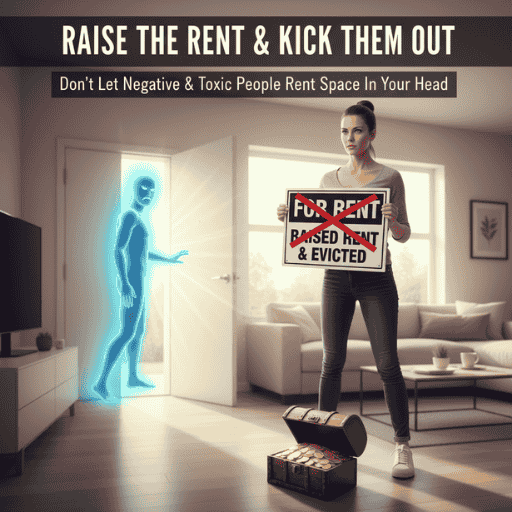
Don't let negative and toxic people rent space in your head. Raise the rent and kick them out.
By: Robert Tew | Published on Mar 14,2026
Category Spiritual Quotes
About This Quote
This modern, no-nonsense wisdom comes from Robert Tew, a contemporary author and speaker who focuses on personal empowerment and mental clarity. Tew's approach is refreshingly direct—he doesn't sugarcoat the reality that some people are toxic influences, and he doesn't shame you for needing to protect yourself from them. This quote uses a perfect metaphor: your mind is your property, and you get to decide who occupies it.
The brilliance of this quote is how it reframes the situation. You're not being mean by protecting your mental space from negativity. You're being a responsible landlord. Negative people don't have a right to occupy your thoughts rent-free. And if they're taking up space in your mind, causing damage, and refusing to contribute anything positive—eviction isn't cruelty. It's basic property management.
Why It Resonates
Think about the negative people in your life. They might be family members, coworkers, old friends, acquaintances, or even strangers on social media. And notice something: even when you're not physically near them, they're occupying your mental space. You replay their comments. You imagine future arguments. You defend yourself to them in your mind. You stress about their opinions.
They're not even present—but they're living rent-free in your head.
That critical family member who always finds something wrong with your choices? You're having entire conversations with them in your mind, defending decisions you have every right to make. That negative coworker who complains constantly? You're mentally engaging with their complaints hours after leaving work. That toxic ex who said something hurtful? Years later, you're still giving them mental real estate.
And here's what's insidious about it: while they're occupying your mind, they're probably not thinking about you at all. They've moved on. They're living their lives. Meanwhile, you're giving them free space in your consciousness, letting them influence your mood, your decisions, your peace of mind.
You wouldn't let someone live in your home without paying rent and treating the space with respect. But you're letting people live in your mind without contributing anything positive, actively making the space worse, and you're not even charging them for the privilege.
This quote resonates because it reveals how backwards this is. You have limited mental capacity. Limited emotional energy. Limited attention. These are precious resources. And you're giving them away to people who don't deserve them, don't appreciate them, and are actively harming you with them.
The Psychology Behind It
Research in psychology distinguishes between "real presence" and "mental presence." Someone can be physically absent but mentally present—occupying your thoughts constantly. Studies show that ruminating about negative people or interactions can be more harmful than the actual interactions themselves. You re-traumatize yourself mentally long after the actual event is over.
There's fascinating research on "mental bandwidth"—your brain's capacity to process information, make decisions, and regulate emotions. When negative people occupy significant mental bandwidth, you have less capacity for everything else. Your work suffers. Your relationships suffer. Your self-care suffers. All because you're using mental resources to engage with people who aren't even present.
Research on "boundary setting" shows that people who clearly establish and maintain boundaries around who influences them mentally experience lower stress, better emotional regulation, and higher life satisfaction. Setting boundaries isn't selfish—it's essential mental health maintenance.
Studies on social media and mental health reveal that even passive exposure to negative people (reading their posts, seeing their comments) activates stress responses and negative thinking patterns. Your brain doesn't distinguish between in-person negativity and digital negativity—it all occupies mental space and affects your wellbeing.
There's also research on "cognitive contamination"—when exposure to negative people or ideas influences your own thinking patterns without you realizing it. Spend enough time with complainers, and you start complaining more. Engage with cynical people, and you become more cynical. The people you give mental space to literally shape how you think.
Research on "selective attention" shows you can train your mind to focus on what matters and dismiss what doesn't. Like developing a spam filter for your mind—negative people's opinions, criticisms, and drama don't have to penetrate your consciousness just because they're speaking or posting.
The Deeper Meaning
This quote is really about ownership and agency. Your mind belongs to you. You decide what occupies it. You decide what gets your attention. You decide what influences your thoughts, your mood, your decisions.
"Don't let negative and toxic people rent space in your head"—this recognizes that you've been giving away something valuable. Mental space. Attention. Emotional energy. You've been treating these like infinite resources when they're actually limited and precious. And you've been giving them to people who aren't contributing anything positive in return.
The "rent" metaphor is perfect because it highlights the transaction. If someone is going to occupy space in your mind, what are they paying? What value are they adding? Are they making you better, wiser, happier, stronger? Or are they just draining resources?
Negative people are terrible tenants. They damage the property (your peace of mind). They don't pay rent (contribute nothing positive). They create problems for other tenants (affect your other relationships). They violate the lease (disrespect your boundaries). You'd evict them from your home immediately. Why are you keeping them in your mind?
"Raise the rent and kick them out"—this is about making the terms unacceptable for them. Raising the rent means requiring positive contribution. If they can't or won't contribute positively, they can't afford the space. Eviction isn't mean—it's necessary property management.
The deeper wisdom: you are responsible for curating what occupies your mind. Your mental space isn't a public park where anyone can set up camp. It's private property. You're the landlord. You set the standards. You enforce the rules. And you absolutely have the right—and responsibility—to evict tenants who are destroying the property.
Living This Truth
Identify who's occupying mental space rent-free. Make a list. Who do you think about constantly? Who do you replay conversations with? Who do you defend yourself to mentally? Who influences your mood even when they're not present? These are your current tenants.
Assess what they're paying. For each person occupying mental space, ask: what are they contributing? Are they making you better? Happier? Wiser? More confident? Or are they just draining you? Tenants who don't pay positive rent need to go.
Notice when you're giving them space. Catch yourself mentally engaging with negative people. "I'm thinking about X again. I'm rehearsing arguments. I'm defending myself to someone who isn't even here." This awareness is the first step to eviction.
Actively redirect attention. When you notice a toxic person occupying your thoughts, consciously redirect. "No, I'm not giving them any more space." Then deliberately think about something or someone that deserves your mental energy. You're not suppressing—you're choosing where to direct limited resources.
Reduce or eliminate exposure. You can't always cut negative people out of your life completely, but you can limit exposure. Unfollow on social media. Minimize interactions. Set boundaries on when and how you engage. Less exposure means less mental occupation.
Raise the rent literally—make engagement costly for them. If someone wants your attention, your mental energy, your emotional investment, they need to contribute something positive. If they can't, they can't afford to be in your life, let alone your mind.
And practice mental eviction. When a negative person shows up in your thoughts, imagine literally evicting them. "You're not paying rent. You're damaging the property. You need to leave. This space is reserved for people and thoughts that serve me." It sounds silly, but visualization works.
Your Reflection Today
Who is currently living rent-free in your head—occupying your mental space without contributing anything positive?
How much of your mental bandwidth is being consumed by people who don't deserve it, don't appreciate it, and are actively harming you with it?
If you evicted the negative tenants, what would you have mental space for? What deserves that real estate more than they do?
Here's what Robert Tew wants you to understand: You are letting people you don't even like control your thoughts. People who hurt you. People who criticize you. People who drain you. And you're giving them this power for free.
They're living in your head rent-free. And while they occupy that space, they're influencing everything—your mood, your decisions, your self-image, your peace of mind.
That critical person whose opinion you can't stop thinking about? They're probably not thinking about you at all. But you're giving them premium real estate in your consciousness. While they're living their life completely unbothered, you're replaying their words, defending yourself to them mentally, letting their negativity poison your thoughts.
That's insane when you really think about it. You wouldn't let these people move into your home, eat your food, use your resources, damage your property, and refuse to leave. But you're letting them do exactly that in your mind.
Your mental space is finite. Your emotional energy is limited. Your attention is precious. These are resources. And you're giving them away to people who not only don't appreciate them—they're actively harming you with them.
Every moment you spend thinking about negative people is a moment you're not spending on things that matter. Your goals. Your growth. Your relationships with people who actually add value to your life. Your peace. Your joy. Your presence with what's actually in front of you.
You can't completely control who enters your life. But you absolutely control who gets to occupy your mind.
"Don't let negative and toxic people rent space in your head."
That sentence alone is liberation. Because you've been acting like you have to let them in. Like you have no choice. Like their opinions, their criticism, their negativity has a right to your mental space.
But it doesn't. You're the landlord. You decide who occupies the property. You set the terms. You enforce the standards.
And toxic people? They can't meet the standards. They don't pay positive rent. They damage the property. They're terrible tenants.
"Raise the rent and kick them out."
Make the cost of occupying your mental space so high that toxic people can't afford it. They need to contribute something positive, something valuable, something that makes you better. If they can't or won't, they don't get space in your mind.
That's not mean. That's not being difficult. That's not holding grudges or being unforgiving.
That's basic property management. That's protecting your most valuable resource—your mental and emotional wellbeing.
So today, right now, identify who's living rent-free in your head. Who are you giving mental space to that doesn't deserve it?
Then evict them. Not with drama. Not with confrontation. Just stop giving them space. When they show up in your thoughts, notice it and redirect. "No. That space is reserved for things that serve me."
Your mind is your property. Protect it. Curate it. Reserve it for people and thoughts that make it better, not worse.
Raise the rent. Kick out the toxic tenants. Reclaim your mental space.
It's yours. Use it wisely. 🧠🚫✨
Amazon Affiliate Disclosure
As an Amazon Associate I earn from qualifying purchases.
Comments
No comment yet. Be the first to comment