
The Story of Two Best Friends and the Bear
By: PJ | Published on Feb 20,2026
Category Moral Stories
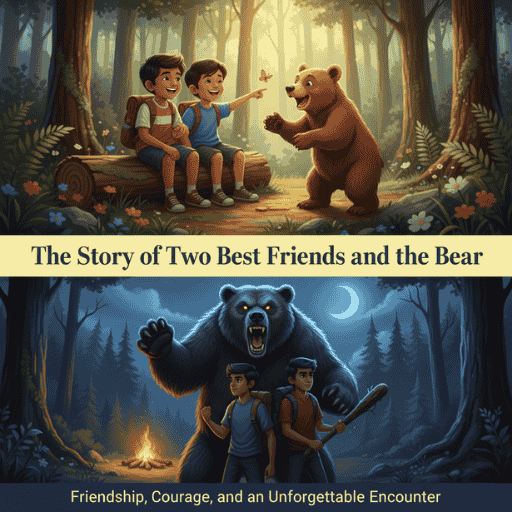
Two best friends were walking through a dense forest together. They had been inseparable since childhood—sharing secrets, dreams, laughter, and promises. They had sworn to each other: "We'll always have each other's backs. No matter what happens, we face it together."
Suddenly, a massive bear appeared on the path ahead. Its eyes locked onto them. The bear began walking toward them, slowly at first, then picking up speed.
Without hesitation, the first friend—the faster runner—turned and sprinted toward the nearest tree. He climbed it quickly, pulling himself to safety among the branches. He didn't look back. He didn't call out. He didn't check on his friend. He saved himself.
The second friend couldn't climb trees. He had never been athletic. He stood frozen on the path, watching the bear approach, watching his best friend disappear into the tree above.
Then he remembered something his grandfather had told him: "Bears don't attack dead bodies." With no other option, he dropped to the ground and lay completely still, holding his breath, playing dead.
The bear approached slowly. It sniffed him. It nudged him with its massive head. It breathed its hot breath on his face. The young man didn't move a muscle. Every instinct screamed at him to run, but he lay still.
After what felt like an eternity, the bear lost interest. It lumbered away into the forest.
Only then did the first friend climb down from the tree. He walked over to his friend, who was still lying on the ground, shaking.
"That was close!" the first friend said, helping him up, acting as if nothing had happened. "I'm glad we're both safe. What did the bear whisper to you? I saw it put its mouth near your ear."
The second friend brushed the dirt from his clothes and looked at his so-called best friend for a long moment.
"The bear," he said quietly, "gave me some advice. It told me to be careful about calling someone a friend who abandons you the moment danger appears."
He walked away. The friendship ended that day. Not with anger or dramatics. Just with the clear understanding that it had never been what he thought it was.
About This Story
This ancient fable appears in various forms across cultures—in Aesop's fables, in Indian Panchatantra stories, and in folk tales worldwide. The core truth it teaches has remained consistent across centuries and continents: true friendship is revealed not in easy times, but in crisis. The story resonates because everyone has experienced some version of this—discovering that someone you thought was a true friend wasn't there when it actually mattered.
The story doesn't have a villain who planned betrayal. It has something more common and more painful: someone who claimed deep friendship but, when tested, revealed their words were empty. The first friend probably genuinely believed he was a good friend during the easy times. He just hadn't been tested until the bear appeared.
Why This Story Resonates
Think about the people you call your "best friend." Have you been through a bear moment together? Have you been tested? Or has your friendship existed only in good times, when being friends costs nothing and requires nothing?
Most friendships are untested. You enjoy each other's company. You have fun together. You say supportive things. You share memes and grab coffee and call each other "best friend." And it all feels real—until the bear shows up.
The bear isn't always literal danger. It's the moment when being your friend becomes difficult, inconvenient, or costly. It's when you lose your job and suddenly people don't know what to say to you. It's when you're going through depression and you're not fun to be around anymore. It's when you're dealing with family crisis and you need real support, not just "thoughts and prayers." It's when standing by you means someone might judge them too.
That's when you find out who your real friends are. Not who says they're your friend. Who actually is your friend.
The first friend in the story didn't think of himself as a bad friend. When they were walking through the forest together, laughing and talking, he probably felt genuine affection. He probably meant it when he said "we'll always have each other's backs." But when the test came, instinct took over. Self-preservation. He climbed the tree and saved himself.
And that's the painful truth about fair-weather friendship: the person probably isn't malicious. They're just not who they claimed to be. They're not who you thought they were. They're not someone whose friendship survives actual difficulty.
The Psychology Behind It
Research in social psychology distinguishes between "weak ties" and "strong ties" in social networks. Weak ties are pleasant, beneficial for networking, good for feeling socially connected—but they don't provide real support in crisis. Strong ties are fewer in number but provide genuine support, loyalty, and commitment that survives difficulty.
Studies on social support during crisis reveal that most people have far fewer strong ties than they think. Many people learn this the hard way—during illness, job loss, divorce, or other crises—when they discover that most people they considered friends disappear when things get hard.
There's fascinating research on what psychologists call "fair-weather friends" versus "foul-weather friends." Fair-weather friends are present when everything is good, when the relationship is easy and enjoyable. Foul-weather friends show up when things are bad, when being your friend requires effort and sacrifice. Research shows that having even one foul-weather friend provides more emotional support and life satisfaction than having many fair-weather friends.
Studies on betrayal and trust show that the pain of discovering a friendship was less than you thought—like the second friend experienced—is often worse than explicit betrayal. It's not that the first friend actively harmed him; he just revealed that the friendship was shallow. That revelation—"you're not who I thought you were"—creates a specific kind of grief.
Research on costly signaling in relationships shows that true commitment is revealed through sacrifice. The first friend's refusal to sacrifice anything (staying on the ground, facing the bear together, even calling out to check if his friend was okay) signaled that his friendship commitment was low. The second friend's willingness to face the bear alone, while his "friend" watched from safety, revealed the friendship imbalance.
The Deeper Meaning
This story has three profound teachings about friendship, testing, and truth.
First: Words are cheap. Actions reveal truth. The first friend had said all the right things. "We'll always have each other's backs." "We're best friends forever." "We face everything together." But when the bear appeared, his actions contradicted every word. The story teaches: don't listen to what people say about friendship. Watch what they do when friendship becomes difficult.
Second: Crisis reveals character, not creates it. The bear didn't make the first friend selfish—it revealed he was selfish. The crisis didn't create his cowardice—it exposed what was always there beneath the surface. People don't become different in crisis; they become more of what they already are. The veneer drops, and you see the truth.
This is why testing is important. Not because you want to doubt your friends, but because you need to know the truth. The second friend thought he had a best friend. He was building his life on that belief. Better to discover the truth in the forest than years later when he needed that friend even more desperately.
Third: Not all friendships are equal, and pretending they are wastes your limited capacity for deep connection. The second friend walked away from the friendship. Not out of bitterness (though he would have been justified), but out of clear sight. He saw the truth: this person was not his best friend. Maybe they could be casual acquaintances. But not someone to trust with anything important.
This is the deeper wisdom: you have limited capacity for close friendship. Time, energy, emotional investment—these are finite. When you invest them in people who aren't actually there for you, you're not available for people who would be. Walking away from shallow friendship isn't giving up—it's making space for genuine connection.
Living This Truth
Stop using the term "best friend" casually. Reserve it for people who've actually proven themselves. Not people you enjoy spending time with. Not people who are fun when things are good. People who've shown up when showing up was hard. People whose actions match their words.
Notice who shows up in your difficult moments. When you're struggling, who reaches out? Who checks in? Who offers actual help, not just "let me know if you need anything"? Those people—even if you don't see them often—are your real friends. Treasure them. Prioritize them. Return that loyalty.
Be willing to test—and be tested. This doesn't mean creating artificial crises. It means paying attention when real difficulties arise. How do your friends respond? How do you respond when your friends face difficulty? Testing reveals truth, and truth—even painful truth—is better than illusion.
Let go of friendships that fail the test. Like the second friend, walk away from people who prove they're not who they claimed to be. Not with drama or demands for apology. Just with clear recognition: "You're not my best friend. Maybe you never were." This creates space for actual best friends to enter your life.
Be the friend who stays on the ground. When your friends face their bears, don't climb the tree and watch from safety. Stay. Even if you're scared. Even if it's inconvenient. Even if you don't know what to do. Just be there. That's what real friends do.
And when someone stays on the ground with you—when someone shows up in your crisis, when someone sticks around through your difficulty, when someone proves their friendship through action—recognize it. Honor it. Return it. That's rare. That's precious. That's a real best friend.
Your Reflection Today
Who in your life has proven themselves in your "bear moments"—the times when being your friend was difficult or inconvenient?
Who have you been a real friend to—staying on the ground when you could have climbed a tree?
Are you calling someone your "best friend" based on what they say, or based on what they've proven through action?
Here's what this ancient fable wants you to understand: Most of the people you call friends—even people you call "best friends"—haven't been tested. You enjoy each other. You have good times together. You say nice things about each other. And it all feels real.
Until the bear shows up.
The bear is the test. The bear is the crisis. The bear is the moment when friendship stops being fun and starts being costly. When being someone's friend means sacrifice, or inconvenience, or standing with them when it would be easier to walk away.
That's when you find out what's real.
And here's the hard truth: most friendships fail this test. Not because people are evil, but because most people are the first friend—when the bear appears, they climb the tree. They save themselves. They disappear. They say "I'm here for you" but they're not actually there. They claim deep friendship but reveal shallow connection.
The second friend discovered this the painful way. His "best friend" abandoned him the instant danger appeared. Didn't even look back. Just climbed to safety and watched while his friend faced the bear alone.
But here's what's important: the second friend learned the truth. Yes, it was painful. Yes, it felt like betrayal. But better to know in the forest, facing a bear, than ten years later, facing something even more serious, still believing this person would be there for him.
The bear didn't create the problem. The bear revealed it. The friendship was always shallow. The second friend just didn't know it until he was tested.
You probably have "friends" like this in your life. People who would climb the tree. People whose friendship is convenient but not committed. People who are there for the good times but gone when things get hard.
And that's okay—as long as you recognize it. The problem isn't having casual friendships. The problem is thinking casual friendships are deep friendships. The problem is calling someone your "best friend" who would leave you on the ground with a bear approaching.
So look at your friendships honestly. Who has been tested and proven themselves? Who has stayed on the ground with you? Who has shown up when showing up was hard?
Those people—they're your real friends. Treasure them. Those are the people who deserve the title "best friend."
And everyone else? They can be acquaintances. They can be people you enjoy. They can be friends in the casual sense. But don't expect them to face bears with you. Don't invest deeply in people who won't invest back.
Save your deepest trust, your deepest loyalty, your deepest friendship for people who've earned it through action, not just words.
The bear will come in your life. Maybe it already has. Maybe it's coming soon.
When it does, look around. Who's on the ground with you? Who climbed the tree?
That's the truth about your friendships.
And once you know the truth, you can honor it—by walking away from shallow friendship and toward real ones.
Be the friend who stays on the ground. Find friends who stay on the ground with you.
That's what "best friend" actually means. 🐻💙
The Moral
A best friend isn't proven by what they say in easy times—they're revealed by what they do in hard times. Anyone can claim deep friendship when friendship costs nothing. Real friendship is shown when being someone's friend becomes difficult, inconvenient, or costly—and they stay anyway. Don't call someone your best friend until they've been tested. And be the kind of friend who stays on the ground when the bear appears, not the one who climbs the tree and watches from safety.
Amazon Affiliate Disclosure
As an Amazon Associate I earn from qualifying purchases.
Comments
No comment yet. Be the first to comment