
The Story of the Two Wolves
By: Compiled from various sources | Published on Jan 21,2026
Category Moral Stories
The Story of the Two Wolves
An old Cherokee grandfather was teaching his grandson about life.
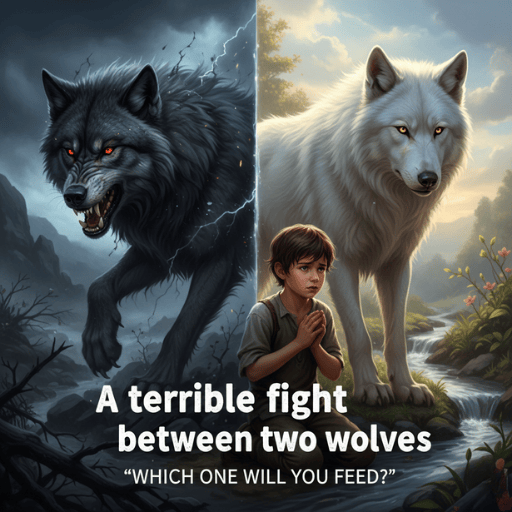
"A fight is going on inside me," he said to the boy. "It is a terrible fight between two wolves."
"One wolf is evil—he is anger, envy, sorrow, regret, greed, arrogance, self-pity, guilt, resentment, inferiority, lies, false pride, superiority, and ego."
"The other wolf is good—he is joy, peace, love, hope, serenity, humility, kindness, benevolence, empathy, generosity, truth, compassion, and faith."
"This same fight is going on inside you, and inside every other person too."
The grandson thought about it for a minute and then asked his grandfather, "Which wolf will win?"
The old Cherokee simply replied, "The one you feed."
About This Story
This powerful parable comes from Cherokee wisdom tradition, though variations of it appear across many Native American cultures. While we cannot attribute it to a single storyteller—as is common with oral traditions passed down through generations—its message has resonated across cultures and time periods. The story has been shared in everything from addiction recovery programs to leadership seminars to parenting books, because it captures a fundamental truth about human nature and the power of choice.
The Cherokee people have always understood that teaching through stories is more powerful than lecturing with rules. This story doesn't tell you what to do—it shows you what's happening inside you and invites you to make the choice. It respects your agency while illuminating your responsibility.
Why This Story Resonates
Think about your internal experience right now. Notice that you're not a single, unified self. You're multiple voices, competing impulses, conflicting desires. Part of you wants to be kind—another part wants revenge. Part of you wants to grow—another part wants to stay comfortable. Part of you is generous—another part is selfish. Part of you seeks truth—another part prefers convenient lies.
You experience this internal conflict constantly. You know you should forgive, but you're holding onto resentment. You want to be patient, but anger keeps surfacing. You aspire to be humble, but ego keeps asserting itself. You value compassion, but judgment keeps arising.
And often you feel powerless in this internal war. "That's just who I am," you tell yourself. "I'm an angry person." "I'm naturally anxious." "I'm not a patient person." "That's my personality." You treat your internal tendencies as fixed traits rather than as the result of choices you're making—often unconsciously—about which thoughts and emotions you're feeding.
This story reveals what's actually happening: you have two wolves inside you. Two sets of tendencies. Two possible ways of being. And they're fighting for dominance. But here's the liberating truth: you're not a passive observer of this fight. You're the one feeding the wolves. You're choosing—through your attention, your thoughts, your actions—which wolf grows stronger.
Every time you replay that conversation where someone wronged you, you're feeding the evil wolf. Every time you practice gratitude, you're feeding the good wolf. Every time you indulge in self-pity, evil wolf. Every time you show compassion to someone, good wolf. Every time you nurse a grudge, evil wolf. Every time you forgive, good wolf.
You think you're just having thoughts and feelings, but you're actually making choices. You're directing your attention, selecting which thoughts to engage with, deciding which emotions to nurture. And those choices determine which wolf grows strong enough to win.
The Psychology Behind It
Modern psychology has caught up to this ancient wisdom. Research in neuroscience shows that what you focus your attention on literally strengthens those neural pathways. Neurons that fire together wire together. If you repeatedly focus on resentment, you're building stronger resentment circuits in your brain. If you repeatedly practice gratitude, you're building stronger gratitude circuits.
Studies on attention and emotional regulation show that you have more control over your emotional life than you typically believe. You can't control what emotions arise—that first flash of anger, that initial surge of jealousy—but you can control what you do next. Do you feed that emotion by dwelling on it, justifying it, rehearsing scenarios? Or do you redirect your attention to something more constructive?
There's fascinating research on neuroplasticity—the brain's ability to reorganize itself throughout life. You're not stuck with your current personality or emotional tendencies. Through consistent practice (feeding the good wolf), you can literally rewire your brain. People who practice loving-kindness meditation show measurable increases in positive emotions and decreases in negative ones—not because they're suppressing negativity, but because they're feeding different neural pathways.
Cognitive Behavioral Therapy (CBT) is essentially teaching people to stop feeding the evil wolf. When you catch negative thought patterns and redirect them, you're choosing which wolf to feed. When you challenge catastrophic thinking and replace it with realistic thinking, you're feeding the good wolf.
Research on habit formation shows that the behaviors and thoughts you engage in regularly become automatic. If you regularly practice kindness, kindness becomes your default. If you regularly indulge in judgment, judgment becomes automatic. You're training yourself through what you feed.
The Deeper Meaning
This story is about moral agency and responsibility. You are not a victim of your personality, your past, or your circumstances. You have two wolves—yes, both are real, both exist in you—but you choose which one dominates your life through what you feed.
The evil wolf isn't trying to destroy you. It's trying to protect you. Anger feels powerful when you feel powerless. Resentment feels justified when you've been hurt. Ego feels necessary when you're insecure. Self-pity feels comforting when life is hard. These tendencies exist for reasons—they're attempting to meet needs or protect you from pain.
But the story teaches that these protective mechanisms ultimately harm you. The evil wolf promises relief but delivers suffering. The more you feed anger, the angrier you become. The more you feed resentment, the more bitter you become. The more you feed ego, the more fragile your self-worth becomes.
The good wolf is counterintuitive. It asks you to be vulnerable (compassion), to let go (forgiveness), to be truthful (even when lies are easier), to give (even when you want to take). This feels risky. This feels like it might leave you weak or exploited.
But the story promises: the good wolf makes you strong. Real strength comes from peace, not anger. Real confidence comes from humility, not ego. Real power comes from generosity, not greed. The good wolf, when fed, creates the life you actually want—connection, meaning, peace, purpose.
The deepest wisdom: you become what you practice. You become what you feed. Your character isn't something you're born with—it's something you cultivate through daily choices about where you direct your attention and energy.
Living This Truth
Practice awareness of which wolf you're feeding. Throughout your day, notice: when you engage with that negative thought, which wolf are you feeding? When you choose that response, which wolf are you strengthening? This isn't about judging yourself—it's about becoming conscious of your choices.
Feed the good wolf deliberately. Don't wait until you feel like being kind—practice kindness anyway. Don't wait until you feel grateful—practice gratitude anyway. Don't wait until forgiveness feels natural—practice forgiving anyway. You're training the good wolf through action, not waiting to act until the good wolf is already strong.
Starve the evil wolf strategically. When anger arises, you don't have to engage with it. When resentment appears, you don't have to rehearse your grievances. When ego wants attention, you don't have to feed it. You can notice these impulses without acting on them, and they gradually lose power.
Create "feeding rituals" for the good wolf. Morning gratitude practice. Evening kindness reflection. Regular acts of service. Meditation on compassion. Whatever helps you consistently feed peace, love, and generosity. Make feeding the good wolf as automatic as brushing your teeth.
Be patient with the process. The evil wolf doesn't disappear. You're not trying to kill it—you're choosing not to feed it. There will be days when it feels stronger because you've fed it out of habit or pain or stress. That's okay. Just return to feeding the good wolf. Over time, the good wolf grows stronger and the evil wolf loses its dominance.
And remember: this is happening in everyone. When someone is acting from their evil wolf—being cruel, selfish, dishonest—they're not evil people. They're people who've been feeding their evil wolf. Recognizing this helps you respond with compassion instead of judgment, which feeds your good wolf even in difficult interactions.
Your Reflection Today
Which wolf have you been feeding lately? Look at your thoughts, your conversations, your focus over the past week—which wolf got more food?
What specific thoughts or behaviors consistently feed your evil wolf? (Complaining? Gossiping? Dwelling on grievances? Comparing yourself to others?)
What's one practice you could start today to consistently feed your good wolf?
Here's what this Cherokee wisdom wants you to understand: You are not stuck being who you are right now. You're not a fixed personality with unchangeable traits. You're the result of countless small choices about which wolf you've been feeding.
Been angry a lot lately? That's because you've been feeding the anger wolf. Replaying arguments. Rehearsing grievances. Justifying your rage. Each time you do that, the anger wolf grows stronger, and being angry becomes more automatic.
Been anxious constantly? That's because you've been feeding the anxiety wolf. Catastrophizing. Obsessing over worst-case scenarios. Rehearsing disasters that haven't happened. Each time you do that, the anxiety wolf gets bigger.
Been critical and judgmental? That's the judgment wolf getting fed. Noticing others' flaws. Comparing yourself favorably. Finding fault. Each feeding makes judgment your automatic lens.
But you can change this. Starting today. Starting right now. By making different choices about what you feed.
The good wolf is hungry. It's been there all along, waiting for food. Waiting for you to practice kindness when you'd rather be cruel. To choose forgiveness when you'd rather hold grudges. To practice humility when ego wants to dominate. To feel compassion when judgment feels easier.
Every time you make that choice—to feed the good wolf—it grows stronger. And not just for that moment. That choice builds neural pathways, creates habits, shapes your character. You're literally becoming a different person through what you feed.
Both wolves will always be inside you. That's human nature. You'll always have the capacity for both good and evil, love and hate, generosity and selfishness. The fight between them is part of being human.
But which wolf wins? The one you feed.
Every day, with every thought, every choice, every action—you're feeding one wolf or the other.
Feed wisely. Your life becomes the wolf you feed. 🐺💫
The Moral
The moral of the story is simple yet profound: You become what you practice. Your character is not fixed—it's cultivated through daily choices about where you direct your attention and energy. Choose consciously which qualities you want to strengthen, because that's exactly what you'll become.
Amazon Affiliate Disclosure
As an Amazon Associate I earn from qualifying purchases.
Comments
No comment yet. Be the first to comment