
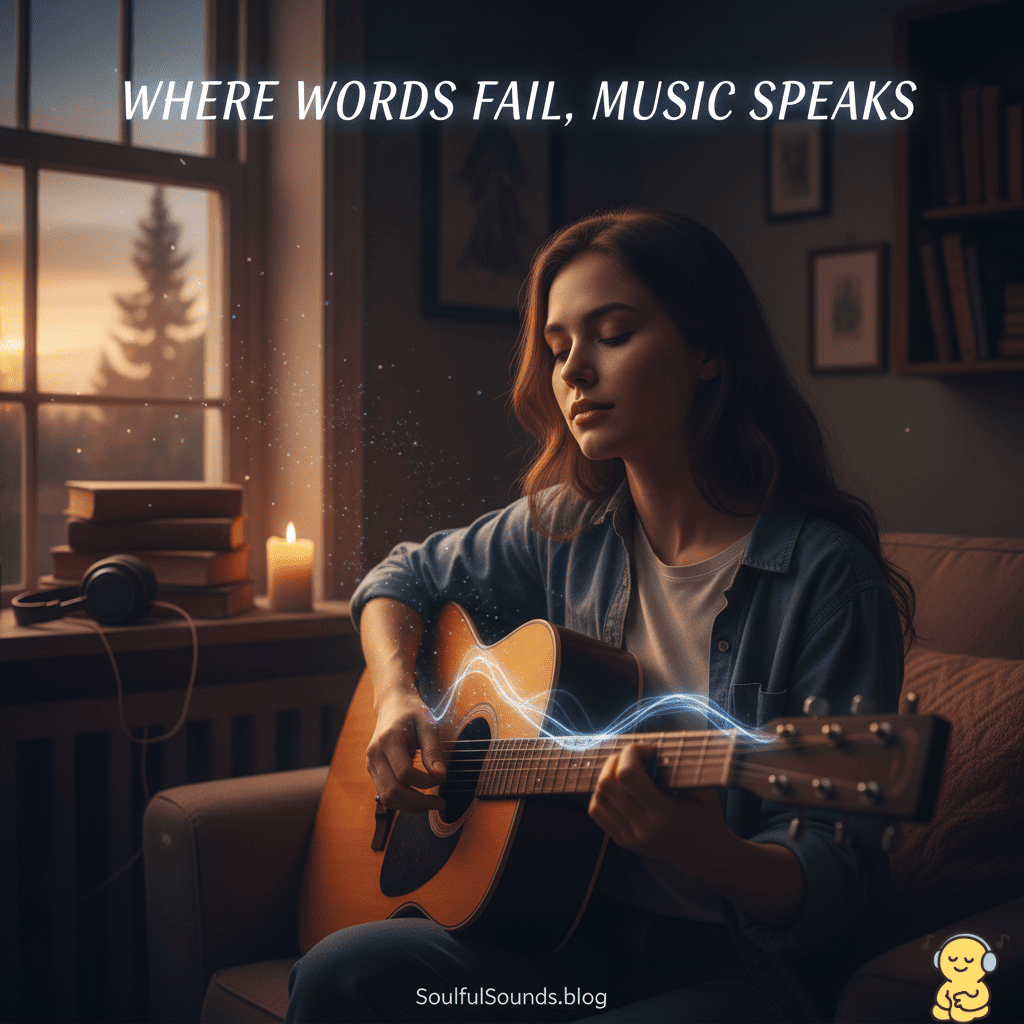
Where words fail, music speaks.
By: Hans Christian Andersen (1805-1875) | Published on Jan 06,2026
Category Quote of the Day
About This Quote
This beautiful observation comes from Hans Christian Andersen, the Danish author best known for his fairy tales including "The Little Mermaid," "The Ugly Duckling," and "The Snow Queen." While Andersen is celebrated primarily for his storytelling, he was also deeply passionate about music, opera, and the arts. This quote appears in his writings about the power of artistic expression, reflecting his understanding that some human experiences transcend verbal language and can only be captured through melody, harmony, and rhythm.
Andersen himself struggled throughout his life with feelings of being an outsider, of not fitting in, of having emotions too big for words. He understood intimately that some things—profound grief, overwhelming joy, spiritual longing, the ache of love—cannot be adequately expressed through language alone. Music becomes the language of the soul when ordinary words prove insufficient.
Why It Resonates
Think about the moments in your life when you simply couldn't find the words. When someone you loved died and people asked "how are you doing?" and you had no words that could capture the depth of your grief. When you fell in love and wanted to express what you felt but every word seemed inadequate. When you experienced something transcendent—a sunset, a spiritual moment, an overwhelming sense of gratitude—and language failed to hold the magnitude of the experience.
These are the moments when you turn to music. You play that song that somehow says what you cannot say. You listen to lyrics that articulate feelings you couldn't name. You let the melody carry emotions too complex for words. The song becomes your voice when your own voice fails.
Music does what words cannot. It bypasses your thinking mind and goes straight to your heart, your body, your soul. You can't logic your way through a piece of music—you have to feel it. A single chord progression can make you cry. A drum beat can make your heart race. A melody can transport you instantly to another time, another place, another version of yourself.
Think about your breakup song, your graduation song, your wedding song, your road trip anthem, your cry-in-the-shower song. These aren't just background noise. They're emotional time capsules. They hold feelings that words alone could never preserve.
When you're angry and words aren't enough, there's a song for that. When you're heartbroken and words feel empty, there's a song for that. When you're in love and words seem silly, there's a song for that. When you're healing and words can't capture the journey, there's a song for that.
Music speaks the language of the human experience in its rawest, truest form. Not the polished, socially acceptable form we present in words, but the messy, real, deeply felt form that exists beneath language.
The Neuroscience Behind It
There's fascinating science behind why music communicates what words cannot. Music activates multiple brain regions simultaneously—areas involved in emotion, memory, motor control, and reward. When you listen to music, your brain releases dopamine (the "feel good" neurotransmitter), oxytocin (the "bonding" hormone), and can even trigger the release of endorphins (natural pain relievers).
Research shows that music activates the limbic system—your brain's emotional center—more directly and powerfully than language does. Words have to be processed through language centers, decoded for meaning, and then trigger emotional responses. Music bypasses much of that intellectual processing and hits your emotional system directly.
This is why you can hear a song in a language you don't understand and still feel its emotional content. The melody, the harmony, the rhythm, the timbre of the singer's voice—all these elements communicate emotion without needing translation.
There's also research on "musical frisson"—that spine-tingling, hair-raising sensation you get from particularly moving music. Studies show this involves the reward centers of your brain lighting up, similar to the response to food, sex, or drugs, but triggered purely by organized sound. Music literally gives you a natural high.
Neuroscientist Daniel Levitin's research reveals that music is processed by virtually every part of the brain. Unlike language, which is primarily left-hemisphere dominant, music engages both hemispheres, the cerebellum, the brain stem, and emotional centers. It's one of the most comprehensive brain activities we engage in.
And here's something powerful: music can access memories and emotions in people with Alzheimer's disease or dementia even when language has been lost. The neural pathways for music are some of the last to deteriorate. This suggests that music reaches deeper, more fundamental parts of our brain than language does.
The Deeper Meaning
This quote points to something profound about human experience: we are more than our words. We have depths that language cannot sound, feelings that vocabulary cannot capture, experiences that defy description.
We live in a world that privileges verbal expression. "Use your words," we tell children. "Can you explain how you feel?" therapists ask. "Write it down," we're advised. We treat language as the primary—sometimes only—valid form of communication.
But this quote reminds us: language has limits. Beautiful, useful, powerful limits, but limits nonetheless. There are dimensions of human experience that exist beyond or beneath language. The wordless cry of grief. The speechless wonder of beauty. The inarticulate longing of the soul.
Music lives in that space where words cannot go. It expresses the inexpressible. It gives voice to the voiceless. It speaks the unspeakable.
When Andersen says "where words fail, music speaks," he's not saying music is better than words or that words are inadequate. He's saying they serve different purposes. Words are the language of the thinking mind, of logic, of clear communication. Music is the language of the feeling heart, of soul, of communion beyond comprehension.
Some truths can only be sung, not spoken. Some emotions can only be drummed, not described. Some experiences can only be symphonied, not summarized.
This is why music is essential to human life across all cultures and all of history. Not because it's entertaining (though it is), but because it fulfills a deep human need: to express and experience what cannot be captured in words.
Living This Truth
Give yourself permission to use music as language. When you can't find words to express what you're feeling, find a song instead. Let the music speak for you. Share a song with someone instead of trying to explain yourself. The song might say it better.
Create emotional playlists for different states: songs for when you're grieving, songs for when you're celebrating, songs for when you're healing, songs for when you're in love, songs for when you're angry, songs for when you're searching. These aren't just entertainment—they're emotional tools, ways of processing what words cannot hold.
Listen actively, not just passively. Put on a song, close your eyes, and really listen. Let yourself feel whatever comes up. Don't try to explain it or analyze it. Just let the music speak to you. Let it say what it needs to say to your soul.
Pay attention to what moves you. If a song makes you cry, there's a reason. If a melody gives you chills, there's meaning there. If a rhythm makes you feel alive, listen to what it's saying. Music is speaking to something in you that words haven't reached.
And when someone shares a song with you—really listen. They're not just sharing a piece of music. They're using it as a language to communicate something they can't say directly. The song they choose is a window into their soul. Honor that.
Use music for healing. Research shows music therapy can help with depression, anxiety, PTSD, chronic pain, and neurological conditions. Not because music distracts from problems, but because it speaks to parts of us that need healing—parts that words cannot reach.
Your Reflection Today
What are you feeling right now that you don't have words for? What's happening in your life that language seems inadequate to capture?
What song speaks what you cannot say? If you had to share a single song right now that expresses where you are, what would it be?
When was the last time music said something to you that words couldn't? What did it say? How did you know?
Here's what Andersen wants you to understand: You don't have to be able to articulate everything you feel. You don't have to find the perfect words for every experience. You don't have to translate everything into language.
Some things are meant to be felt, not explained. Some emotions are meant to be sung, not spoken. Some experiences are meant to be heard in melody, not described in sentences.
Where words fail, music speaks.
When grief is too deep for conversation, there's a song that knows that depth. When joy is too big for description, there's a melody that matches that bigness. When love is too overwhelming for vocabulary, there's a harmony that holds that overwhelm.
You are more than your words. Your experiences are bigger than your vocabulary. Your soul speaks languages that your mouth doesn't know.
And music—beautiful, wordless, soul-stirring music—gives voice to all of it.
So when you can't find the words, don't force it. Find the song instead.
Let it speak for you. Let it speak to you. Let it speak through you.
Because some truths are too deep for words. Some feelings are too vast for language. Some moments are too sacred for explanation.
But there's a song for them. There's always a song.
Listen. Feel. Let the music speak.
It's saying what your words cannot. And that's exactly what you need to hear. 🎵🎶
Amazon Affiliate Disclosure
As an Amazon Associate I earn from qualifying purchases.
Comments
No comment yet. Be the first to comment